
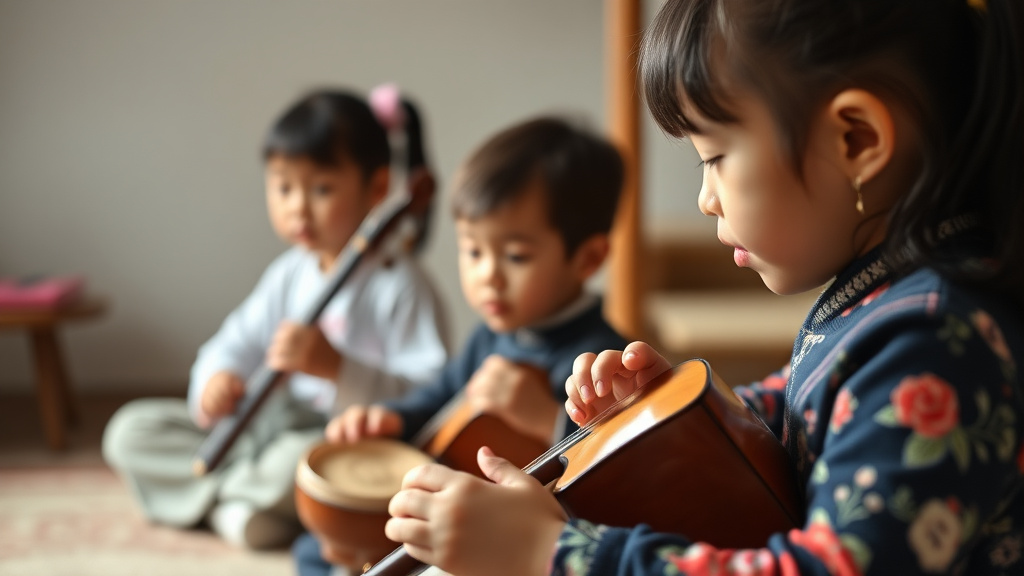
Have you ever thought about why some of the most gifted minds began studying piano or violin as children? Recent studies show a strong link between classical music training and enhanced cognitive development in young learners. This article explores how formal music training improves recall, boosts math skills, and improves linguistic development in children. Uncover the science behind why classical music training provides more than just entertainment—it’s a effective instrument for developing mental capabilities during critical growth periods.
The Brain Science Behind Musical Learning
Classical music education activates multiple regions of the growing brain simultaneously, forming neural pathways that transcend musical ability. When children learn to read sheet music, coordinate their fingers, and engage in critical listening, they utilize the prefrontal cortex, motor cortex, and auditory processing areas simultaneously. This comprehensive brain activation strengthens synaptic connections and supports neural plasticity, the brain’s remarkable ability to reorganize and form new neural connections across the lifespan. Research based on neuroimaging reveals that young musicians exhibit greater gray matter volume in areas connected to language processing and mathematical reasoning.
The consistent training necessary for classical music instruction strengthens the corpus callosum, the collection of neural pathways linking the brain’s left and right hemispheres. This enhanced communication among brain regions promotes better integration of logical and imaginative thought, crucial for problem-solving and innovation. Additionally, practicing instrumental music triggers the release of dopamine, a brain chemical critical to motivation, memory formation, and emotional regulation. These neurochemical changes establish an optimal environment for knowledge development, allowing children better equipped for developing new abilities across all academic subjects and life domains.
Academic Performance and Language Proficiency
Classical music training shows remarkable influences on academic achievement across multiple subjects. Students who participate in formal music training continually exhibit enhanced results in mathematics and comprehension abilities. The focus demanded to master an instrument translates directly into better attentiveness during academic instruction. Furthermore, research indicates that young musicians cultivate improved analytical skills, which strongly connects to higher assessment results and overall scholastic success throughout their educational journey.
Language development benefits significantly from classical music instruction, particularly in phonological awareness and vocabulary acquisition. The complex auditory processing involved in learning music strengthens neural pathways essential for language understanding and expression. Children engaged in musical study show improved verbal skills, improved reading fluency, and greater capacity to understand linguistic nuances. These linguistic advantages go further than native language learning, as young musicians often demonstrate enhanced capacity for acquiring foreign languages with better mastery and competence.
Extended Advantages and Real-World Uses
Sustained Intellectual Advantages into Adulthood
The benefits of classical music instruction extend well beyond childhood, creating long-lasting mental benefits that continue into adulthood. Research shows that people who undertook musical education during their formative years maintain superior performance in academic and professional settings throughout their lives. These long-term improvements manifest as stronger analytical capabilities, better memory performance, and increased mental flexibility. The neural pathways strengthened during formative music instruction continue to enable complex mental operations, allowing adults to address difficult problems with greater ease and creativity than their non-musically trained peers.
Integration into Educational Systems
Educational institutions globally growing acknowledge the value of incorporating classical music training into core curriculum. Schools that prioritize music education in conjunction with traditional academics document notable gains in students’ academic performance, including improved test results and improved student conduct. Implementing formal music curricula requires strategic preparation, skilled educators, and adequate resources, yet the investment delivers meaningful results. Students participating in classical music training demonstrate improved focus, discipline, and teamwork abilities that transfer directly to other academic subjects, creating a more well-rounded educational experience that prepares them for upcoming opportunities.
Effective Application for Educators and Parents
Parents and educators seeking to maximize cognitive development should examine accessible pathways to classical music training for young children. Starting lessons from ages four to seven produces the best outcomes, with regular practice routines producing measurable improvements within months. Skilled instruction from seasoned instructors proves vital, as does selecting instruments suited to individual interests and physical capabilities. Establishing nurturing home spaces that support ongoing practice, attending concerts, and recognizing musical accomplishments fosters lasting participation. Even small investments in classical music education offer substantial cognitive improvements that boost children’s cognitive skills and overall quality of life.
