
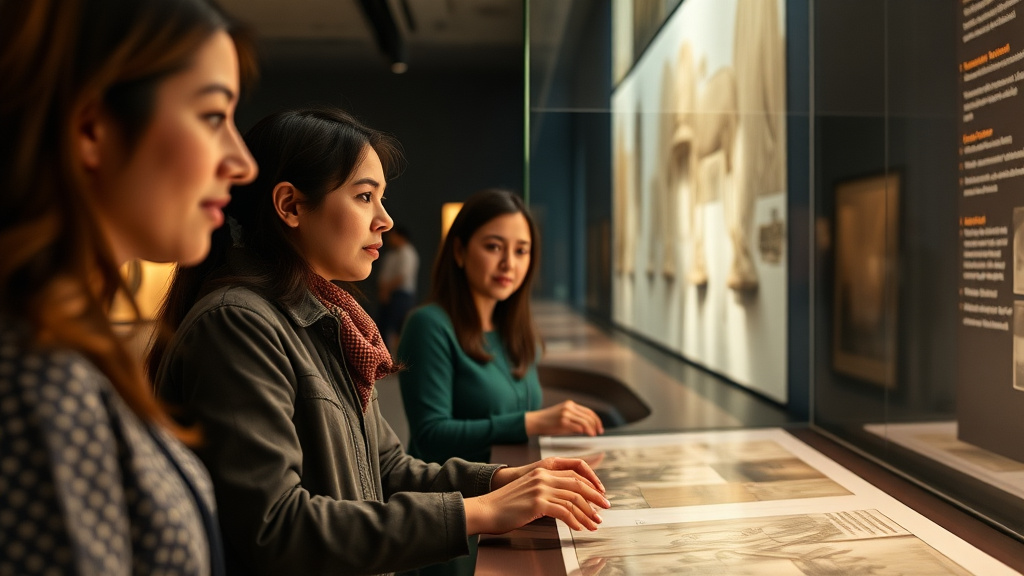
Museums are evolving into dynamic spaces where stories of heritage come alive. Today’s innovative curators are reimagining exhibitions that go beyond traditional displays, crafting engaging encounters that honor multiple communities and safeguard heritage for future generations. By combining innovative techniques with meaningful narratives, these innovative leaders are questioning established views and prompting people to connect meaningfully with their own heritage. Learn how revolutionary curatorial methods are reshaping the cultural institutions and reimagining what it means to recognize our shared human story.
Modern Exhibition Strategies toward Cultural Narratives
Modern museum cultural specialists are transforming how historical accounts are communicated to global audiences. By stepping away from traditional exhibits, they develop engaging spaces that invite guests to discover their own identities and connections to heritage. These specialists utilize sensory-rich encounters, blending visual art, sound, and hands-on features to strengthen visitor connection. Contemporary exhibitions now showcase diverse perspectives often neglected in traditional museums, guaranteeing marginalized communities witness their histories genuinely honored and recognized.
Technology serves as a crucial component in transforming museum curation and audience engagement. Immersive digital environments, AR experiences, and virtual reconstructions allow audiences to experience past events and cultural frameworks with striking immediacy. Curators utilize these resources to span geographical and temporal distances, making heritage accessible to worldwide viewers. This technological integration doesn’t eliminate curator-led storytelling; rather, it enhances exhibition vision, allowing curators to communicate intricate stories with resonance and comprehensibility that traditional methods alone cannot deliver.
Joint curation efforts exemplifies another groundbreaking strategy redefining museum exhibitions in contemporary practice. Curators increasingly partner with community members, cultural practitioners, and descendant groups to ensure accurate depiction of their heritage. This inclusive methodology acknowledges that communities themselves are the main knowledge holders on their own histories and cultural significance. By elevating community input in exhibition development, museums shift from authoritative bodies into collaborative environments where multiple stories interact and enrich collective understanding.
Cross-disciplinary research approaches enhance modern curatorial practice markedly. Curators now collaborate with historians, anthropologists, artists, and scientific experts to analyze museum artifacts from various analytical viewpoints. This comprehensive approach uncovers hidden connections between artifacts, historical developments, and cultural traditions. By integrating various disciplines, exhibitions become increasingly sophisticated and intellectually robust, offering visitors sophisticated understandings of how cultural identity forms through complex interactions of history, geography, economic factors, and creative expression.
Thematic flexibility allows curators to address contemporary issues through historical and cultural lenses. Modern exhibitions showcase how heritage informs present-day identity challenges, community activism, and social cohesion. Rather than portraying culture as unchanging or historical, innovative curators highlight its living, evolving nature. This approach connects strongly with audiences seeking meaning and connection, converting museums into spaces where history and contemporary life engage meaningfully.
Accessibility and inclusivity have become fundamental curatorial principles in groundbreaking exhibitions. Museums now design exhibitions taking into account varied ways of learning, physical abilities, and different cultural perspectives. Multilingual interpretation, sensory-friendly hours, and different levels of participation allow broader audiences connect with exhibitions. This commitment to inclusivity reflects modern curatorial philosophy that cultural collections belongs to everyone and should be experienced in an inclusive way.
Interactive Exhibitions and Community Involvement
Modern museums are revolutionizing visitor experiences through engaging displays that shift passive observation into direct engagement. These interactive spaces prompt audiences to explore cultural accounts firsthand, building deeper connections with cultural identity and heritage. By weaving in interactive elements, technology platforms, and engaging atmospheres, curators develop spaces where visitors act as co-creators of meaning. Outreach programs extend beyond gallery walls, cementing museums as vital cultural hubs that reflect and celebrate the multiple viewpoints of their communities and residents.
User-Centered Design Methods
Curators now utilize participatory design methodologies that position communities as central to curatorial planning. This partnership model ensures that cultural depictions authentically reflect lived experiences and perspectives of the communities being showcased. By conducting extensive consultations, community forums, and participatory creation events, museums foster trust and responsibility. These collaborative initiatives convert exhibitions into venues for exchange, where underrepresented perspectives receive visibility and audiences encounter narratives created by community members with lived experience.
The incorporation of audience input across the exhibition planning generates exhibitions that engage more powerfully with diverse audiences. Museums implementing audience participation strategies report higher attendance rates, better learning results, and more robust community connections. This collaborative framework questions traditional hierarchies where curators held sole control over narrative formation. Instead, exhibitions become collaborative environments where multiple perspectives interact, enriching the visitor journey and building more welcoming inclusive cultural accounts that celebrate real community narratives.
- Host local advisory groups directing exhibition themes
- Conduct collaborative workshops involving heritage partners
- Incorporate visitor feedback within interpretive materials
- Highlight community members in the role of exhibition contributors
- Maintain continuous conversation with community cultural institutions
Well-designed participatory exhibitions demonstrate significant outcomes on community empowerment and heritage conservation. Museums using these strategies experience higher visitor numbers from underrepresented demographics and greater backing for heritage organizations. The community-centered model proves particularly effective for exhibitions exploring underrepresented communities and historical traditions, as community involvement ensures cultural truth and contemporary significance. These jointly-created exhibitions ultimately advance broader institutional goals of equity, open participation, and ethical commitment while generating lasting impressions that deepen visitors’ understanding of cultural expression.
Safeguarding Cultural Legacy Through Technological Advancement
Digital technology has revolutionized how museums preserve and present cultural heritage. Sophisticated imaging methods document intricate details of artifacts, building comprehensive virtual collections available for researchers and the public worldwide. Immersive VR environments transport visitors into historical moments, allowing them to examine ancient civilizations and cultural sites from their homes. These technological innovations ensure that vulnerable historical objects are preserved while remaining available for academic use and scholarly research. Museums now utilize artificial intelligence to index materials, identify patterns in cultural artifacts, and strengthen protective measures significantly.
Interactive digital platforms expand availability of cultural treasures formerly accessible solely to museum visitors. Web-based exhibitions showcasing high-resolution images, 3D models, and multimedia content connect with global audiences, eliminating geographical barriers to cultural participation. Museums collaborate with communities to create digital repositories that celebrate local histories and traditions. These initiatives give agency to cultural groups to shape their stories and share heritage on their own terms. Social media integration broadens museum reach, fostering dynamic digital communities where people discuss cultural identity and preservation efforts consistently.
Augmented reality applications improve physical museum visits, overlaying digital information onto displayed artifacts. Visitors scan objects with smartphones to access detailed histories, artist perspectives, and contextual cultural information instantly. Gamification elements promote deeper exploration, transforming passive observation into engaging educational encounters. These combined methods appeal to diverse audiences, particularly younger generations accustomed to digital interaction. Museums report increased engagement and prolonged visits when augmented reality features support traditional exhibitions effectively.
Artificial intelligence tools assist curators in evaluating vast collections, identifying underrepresented narratives, and suggesting thematic connections. Machine learning algorithms uncover patterns in cultural artifacts, exposing relationships between different heritage traditions. Predictive analytics help museums predict visitor interests and tailor exhibition experiences accordingly. These technologies enable curators to produce more inclusive exhibitions reflecting varied viewpoints and underrepresented histories. Digital innovation enables museums to question historical narratives and offer multifaceted interpretations of cultural identity completely.
Crowdsourcing projects encourage communities to contribute personal stories and artifacts to online archives. Museums partner with cultural groups to make digital locally-owned heritage items, building collaborative archives that preserve collective memory. Digital systems permit visitors to contribute visual materials, texts, and accounts associated with exhibitions. This participatory approach converts museums into community spaces where heritage preservation becomes a collective duty. Digital tools facilitate dialogue between age groups, connecting ancestral expertise with emerging adults seeking cultural ties and self-discovery.
Looking ahead, museums are advancing digital preservation technologies to ensure cultural heritage endures environmental challenges and societal changes. Blockchain technology offers secure, decentralized archiving of cultural records, safeguarding intellectual property rights of indigenous communities. Virtual museum experiences will develop greater complexity, delivering personalized journeys through cultural narratives. Museums will integrate emerging technologies while upholding curatorial integrity and community collaboration. Digital innovation ultimately supports museums’ fundamental mission: protecting humanity’s diverse heritage and facilitating meaningful cultural engagement across generations and continents.
